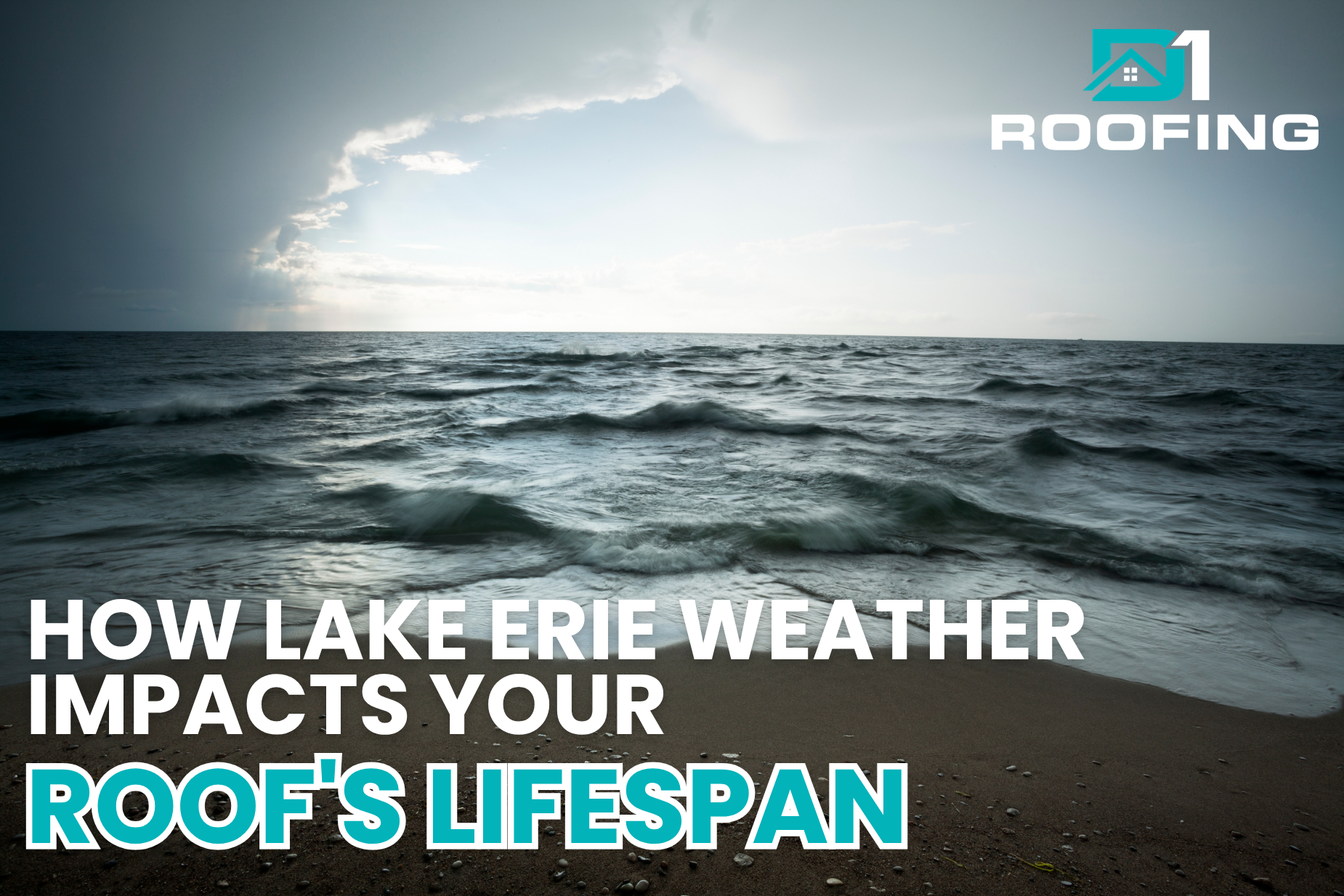
If you own a home in Cleveland, your roof works harder than roofs almost anywhere else in Ohio. Sitting along Lake Erie means dealing with lake-effect snow, sharp freeze-thaw swings, and wind gusts that pull straight off the water. Each of these conditions shortens your Cleveland roof lifespan a little differently, and understanding how Lake Erie weather roof damage develops helps you catch problems while they’re still small and inexpensive to fix.
Why Lake Erie Weather Is Uniquely Hard on Roofs
Cleveland’s location puts it directly in the path of weather patterns that most of the state never sees. Here’s what that means for the roof over your head.
Lake-Effect Snow and Ice Dams
Lake-effect snow can dump far more accumulation on Cleveland roofs than a typical winter storm elsewhere in Ohio, and this kind of lake-effect snow roof damage often starts small. That extra weight is one concern, but the bigger issue is what happens as the snow melts and refreezes. Warm air escaping from the attic melts snow on the upper roof, and that water runs down to the colder eaves, where it refreezes into an ice dam. Ice dams Cleveland homeowners see year after year form in this exact way, and once a dam forms, meltwater has nowhere to go but backward, under the shingles and into the roof deck, where it can cause leaks, rot, and damaged insulation long before you notice a stain on the ceiling.
Freeze-Thaw Cycles and Shingle Damage
Cleveland winters rarely settle into one temperature for long, and this back-and-forth is where a lot of freeze-thaw roof damage comes from. Repeated swings above and below freezing mean that any moisture trapped in a small crack or seam expands and contracts over and over. Over a season, that cycle widens minor imperfections into real vulnerabilities, accelerates granule loss, and makes shingles more brittle and prone to cracking. A roof that would last two to three decades in a milder climate often shows this kind of wear noticeably sooner along the lakeshore.
High Winds Off the Lake
With no real barrier between the open water and the shoreline, wind gusts off Lake Erie tend to be stronger and more sustained than inland wind events. Sustained wind can lift shingle edges, loosen flashing around chimneys and vents, and drive rain sideways underneath roofing materials that would otherwise shed water just fine. Even when a wind event doesn’t cause obvious damage, it can loosen components enough that the next storm finishes the job.
Signs Your Roof Is Showing Weather Wear
Lake Erie’s weather works slowly, so the warning signs are often easy to miss until they turn into a larger repair — or until a single storm turns minor wear into a storm damage repair situation. Watch Fo
- Granules collecting in gutters or at the base of downspouts
- Shingles that are curling, cracking, or lifting at the edges
- Ice dams forming along the eaves every winter
- Water stains or discoloration on interior ceilings and walls
- Missing or visibly damaged flashing around chimneys, vents, and skylights
- A roof deck that feels soft, spongy, or uneven underfoot
How to Extend Your Roof’s Lifespan in Northeast Ohio
None of these weather patterns are going away, but the right maintenance habits go a long way toward protecting your investment:
- Schedule a professional roof inspection, Cleveland, OH, homeowners can count on each fall, before winter weather sets in
- Improve attic insulation and ventilation to reduce the temperature difference that causes ice dams
- Keep gutters clear, or upgrade to new gutter installation if yours are undersized for lake-effect snowmelt volume
- Handle minor roof repair issues as soon as they’re identified, rather than waiting for spring
- Choose wind- and impact-rated materials if you’re due for a replacement
D1 Roofing Serves Homeowners Across Ohio and Beyond
D1 Roofing & Exteriors works with homeowners throughout Cleveland and communities across Ohio and the surrounding region, so our crews know firsthand what lake-effect snow, freeze-thaw cycles, and high winds do to a roof over time. If a repair or replacement is on the horizon, we also offer financing options to help make the project more manageable, whatever the scope of work turns out to be.
Schedule a Free Roof Inspection Today
The best time to find out how Lake Erie weather has affected your roof is before the next storm rolls in, not after. Get an instant roof quote and have a D1 Roofing specialist take a closer look at what your roof needs to make it through another Cleveland winter.
Common Questions About Cleveland Roofs and Lake Erie Weather
How does Lake Erie weather affect roof lifespan in Cleveland?
Lake Erie weather shortens roof lifespan by combining heavy lake-effect snow loads, frequent freeze-thaw cycles, and strong lakeshore winds, all of which accelerate shingle wear, ice dam formation, and flashing damage compared to roofs in milder inland climates.
What are ice dams and how do they damage a roof?
Ice dams are ridges of ice that form at the roof’s edge when melting snow refreezes before it can drain off. They damage roofs by trapping meltwater, which then backs up under shingles and into the roof deck, leading to leaks, rot, and interior water stains.
How often should Cleveland homeowners get a roof inspection?
Cleveland homeowners should get a professional roof inspection at least once a year, ideally in the fall before winter weather arrives, along with a follow-up check after any major storm.
Does D1 Roofing serve areas outside Cleveland?
Yes, D1 Roofing & Exteriors serves homeowners across multiple communities in Ohio and the surrounding region, in addition to Cleveland.
What roofing materials hold up best against lake-effect weather?
Impact-resistant and wind-rated shingles tend to hold up best against lake-effect weather, since they’re built to resist the granule loss, cracking, and wind-lift that repeated snow, freeze-thaw cycles, and lakeshore gusts cause over time.